
How a DGRIE Shoe Is Made
12 Steps, by Hand in Our Workshop
Every pair of DGRIE shoes is the result of a quiet, deliberate process. There are no shortcuts in our workshop — only twelve carefully ordered steps, each carried out by hand, by craftsmen who have spent years perfecting their part of the journey. From the first cut of premium leather to the final stamp of the DGRIE crest, this is how we build a shoe that is meant to be worn for years, not seasons.
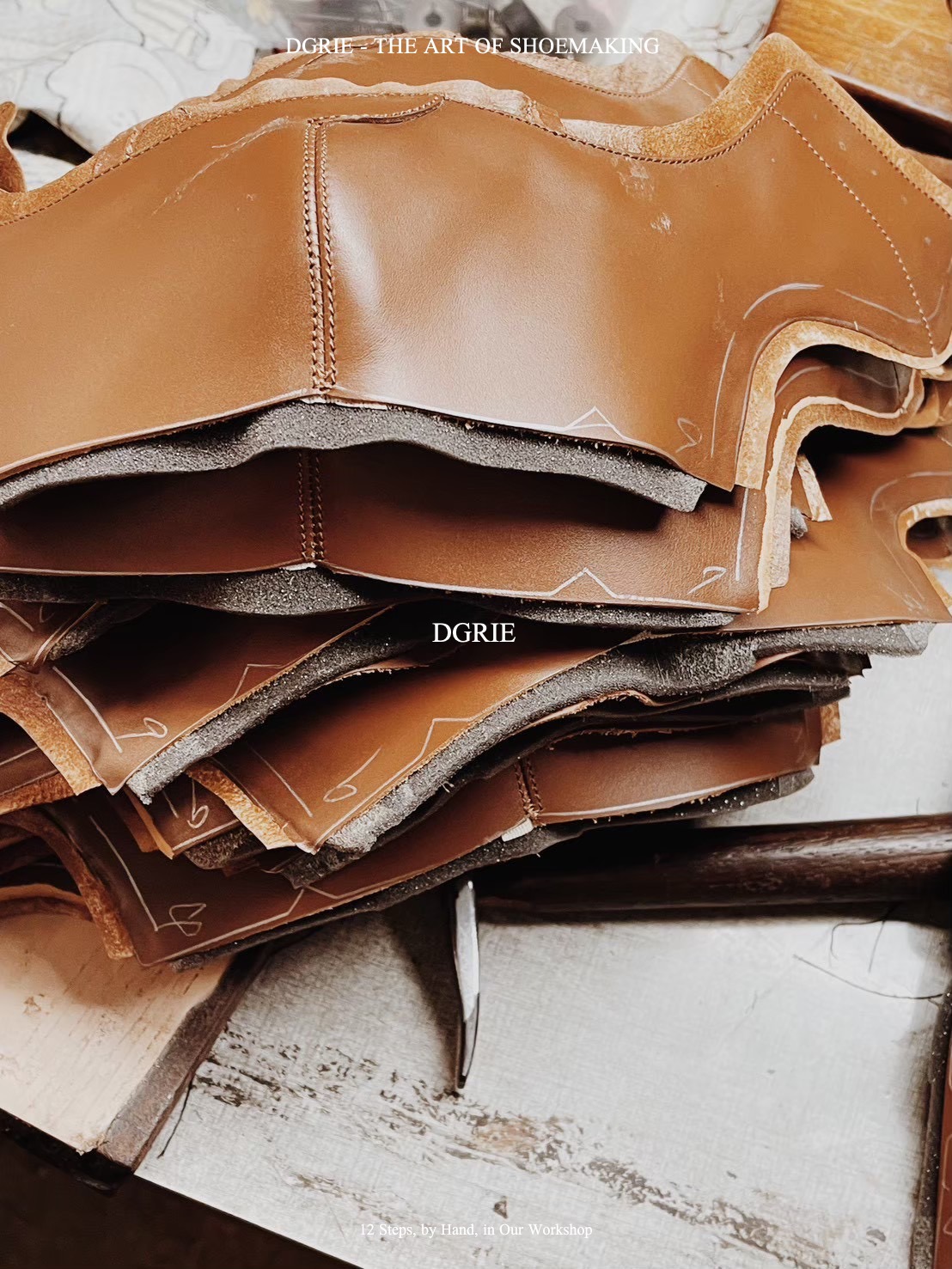
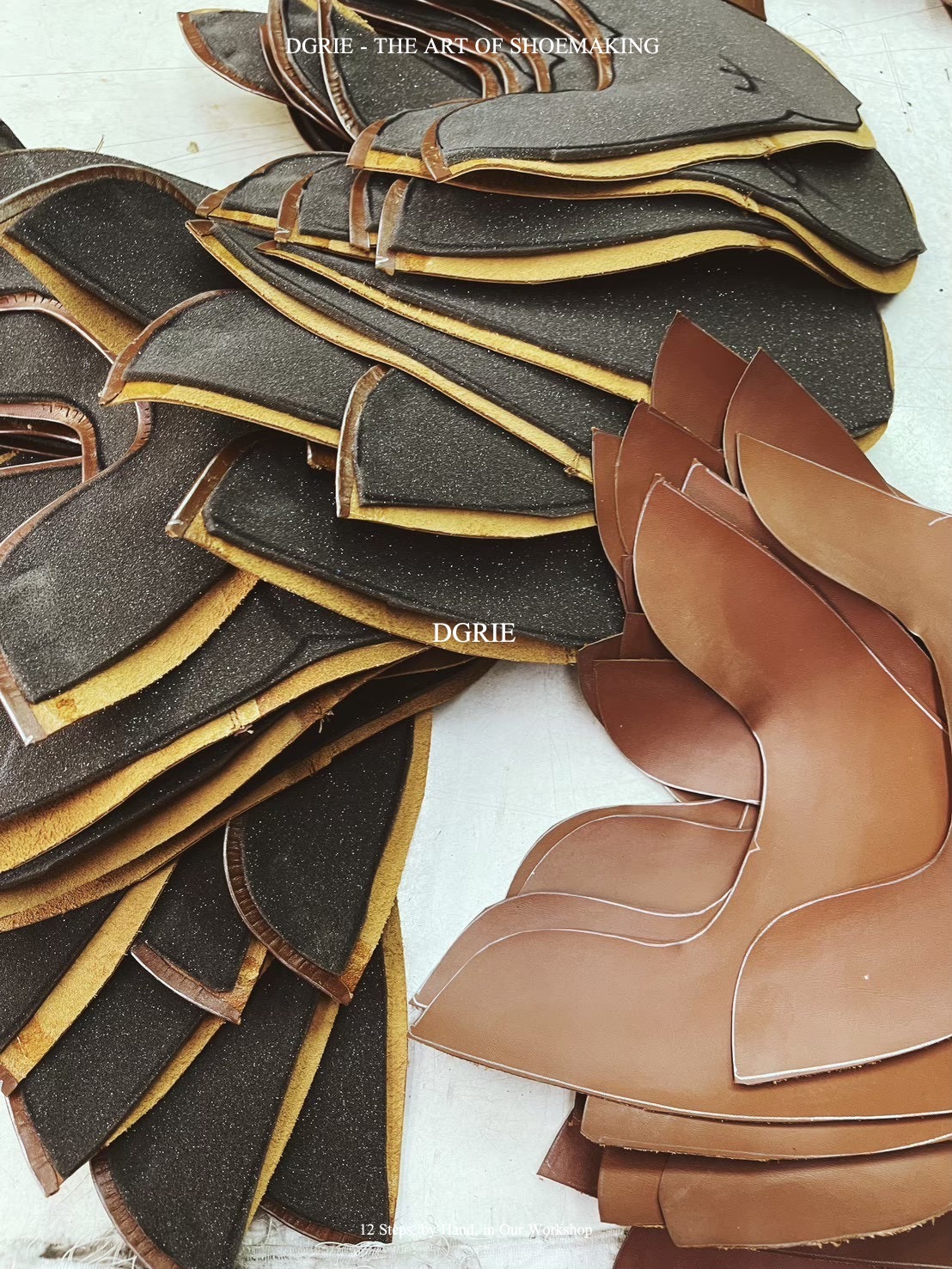
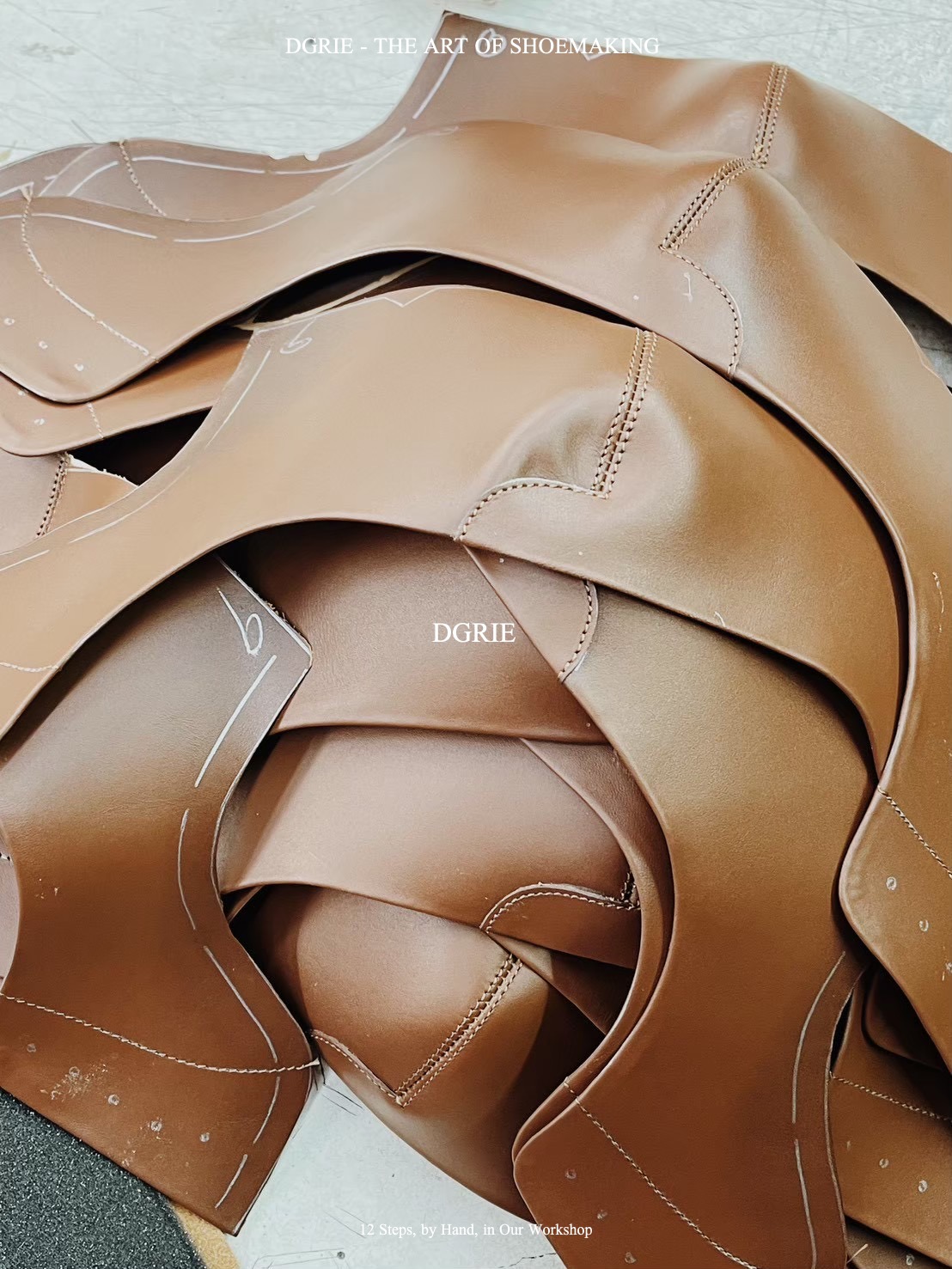
Step 01 — Pattern Cutting
Every pair begins with the leather. Our craftsmen select premium hides — full-grain calf, vegetable-tanned cowhide, and supple suede — chosen for their grain, their stretch, and their ability to age beautifully over time. Using sharpened blades and time-worn paper templates, each pattern piece is cut by hand: the vamp, the quarters, the tongue, the heel counter, and the linings. Cutting by hand allows the craftsman to read the leather, working around natural marks and grain direction so that every shoe is balanced, symmetrical, and ready to last.
Step 02 — Skiving the Edges
Before any pieces can be assembled, their edges must be skived — thinned down with a hand knife so that seams lie flat and folded edges curve smoothly around the shape of the foot. This is one of the quietest steps in the workshop, but one of the most important: a poorly skived edge will create a bulky seam, an uncomfortable pressure point, or a line that never quite sits right. Each edge is shaved by feel, the leather pared down to a feather thinness only at the points where it needs to fold or overlap.
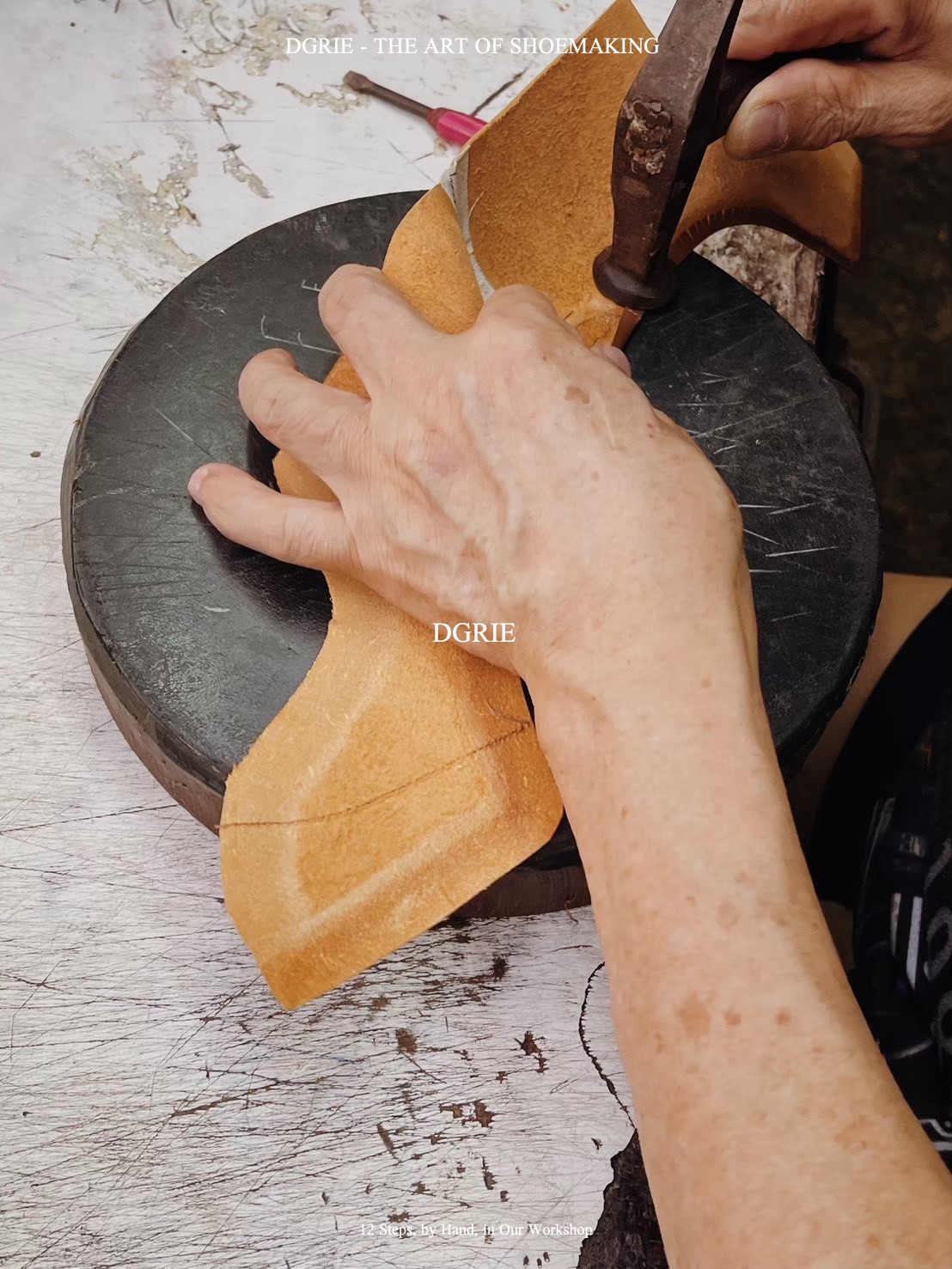
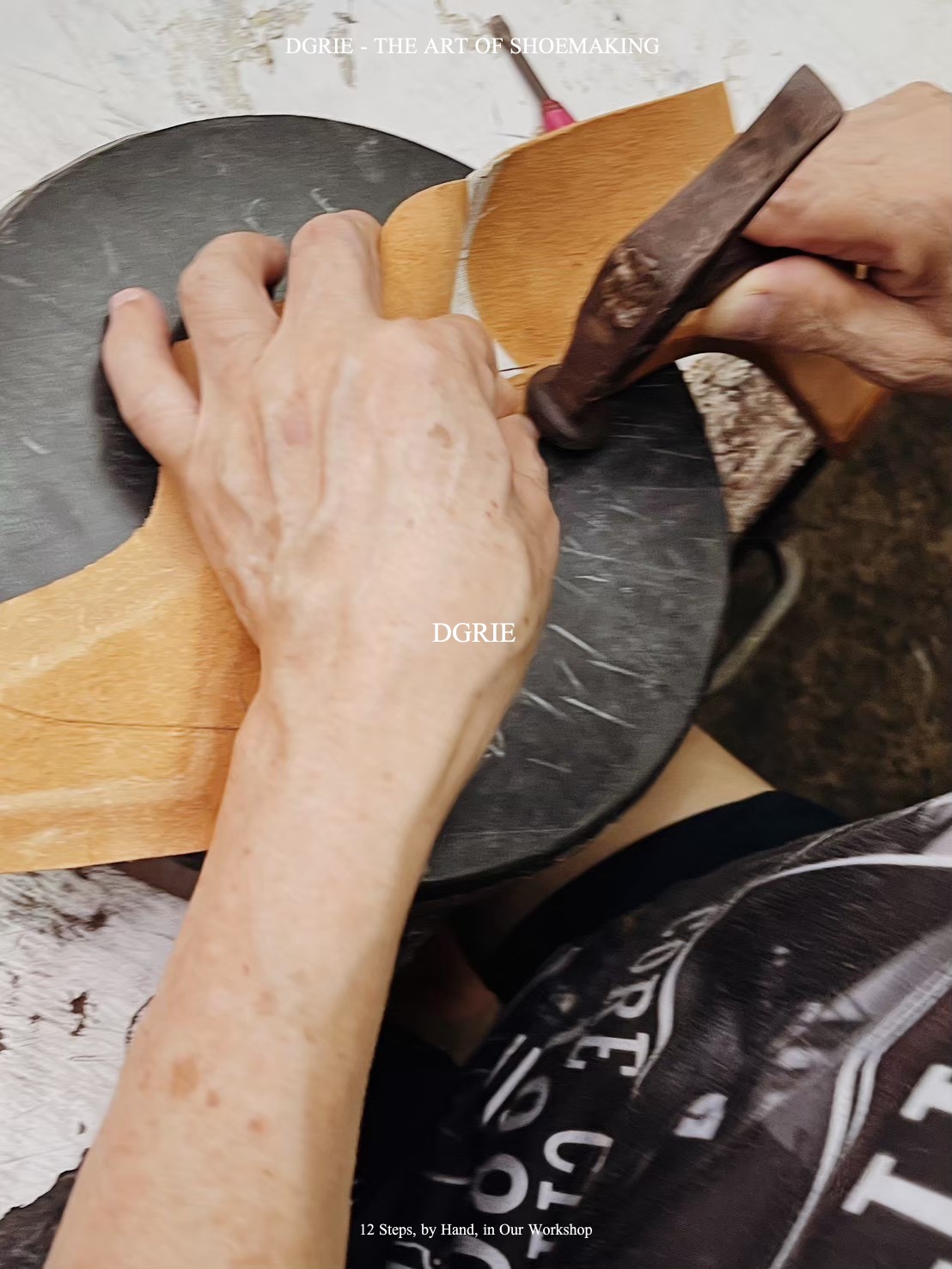
Step 03 — Waxing the Thread
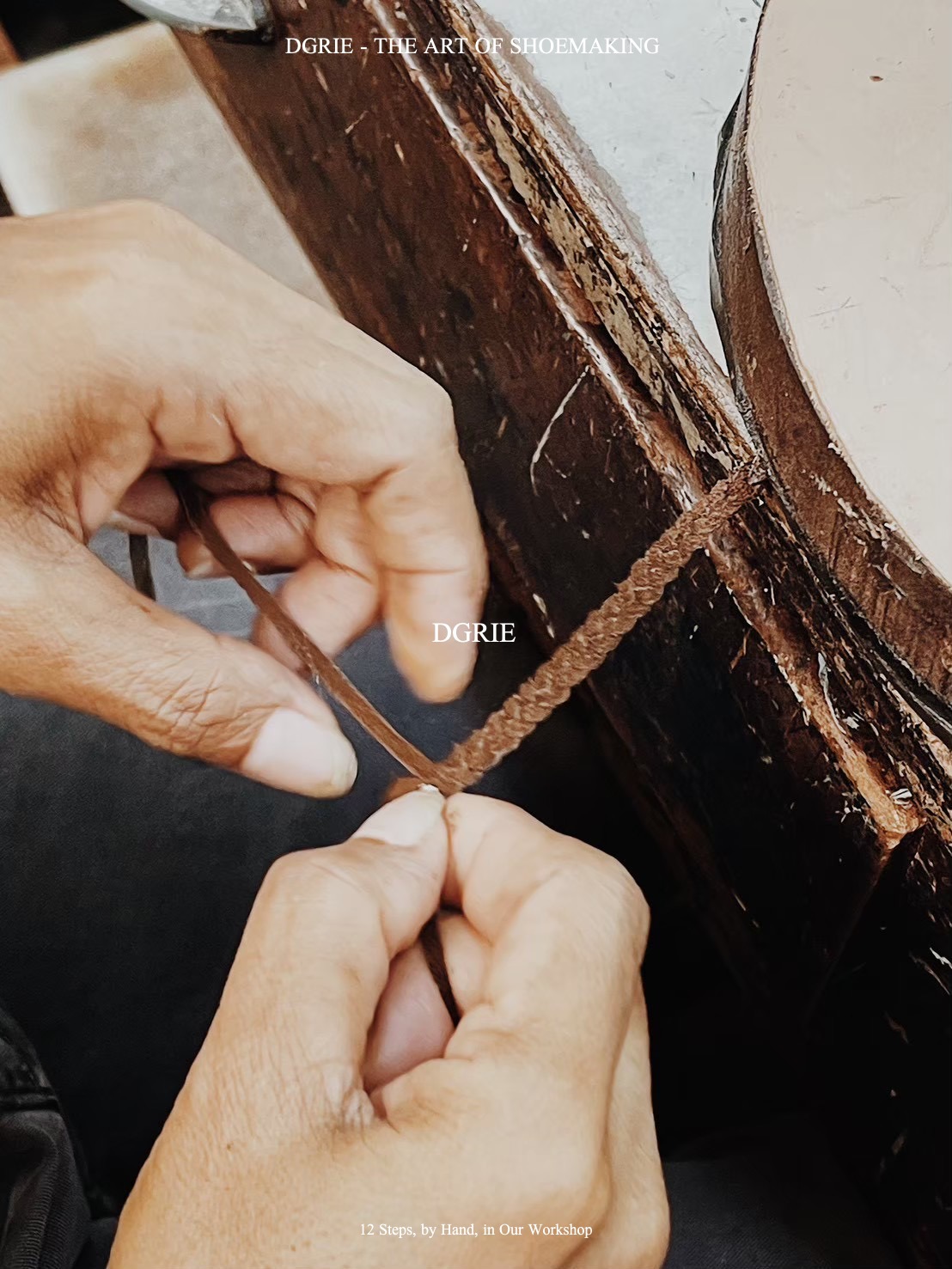
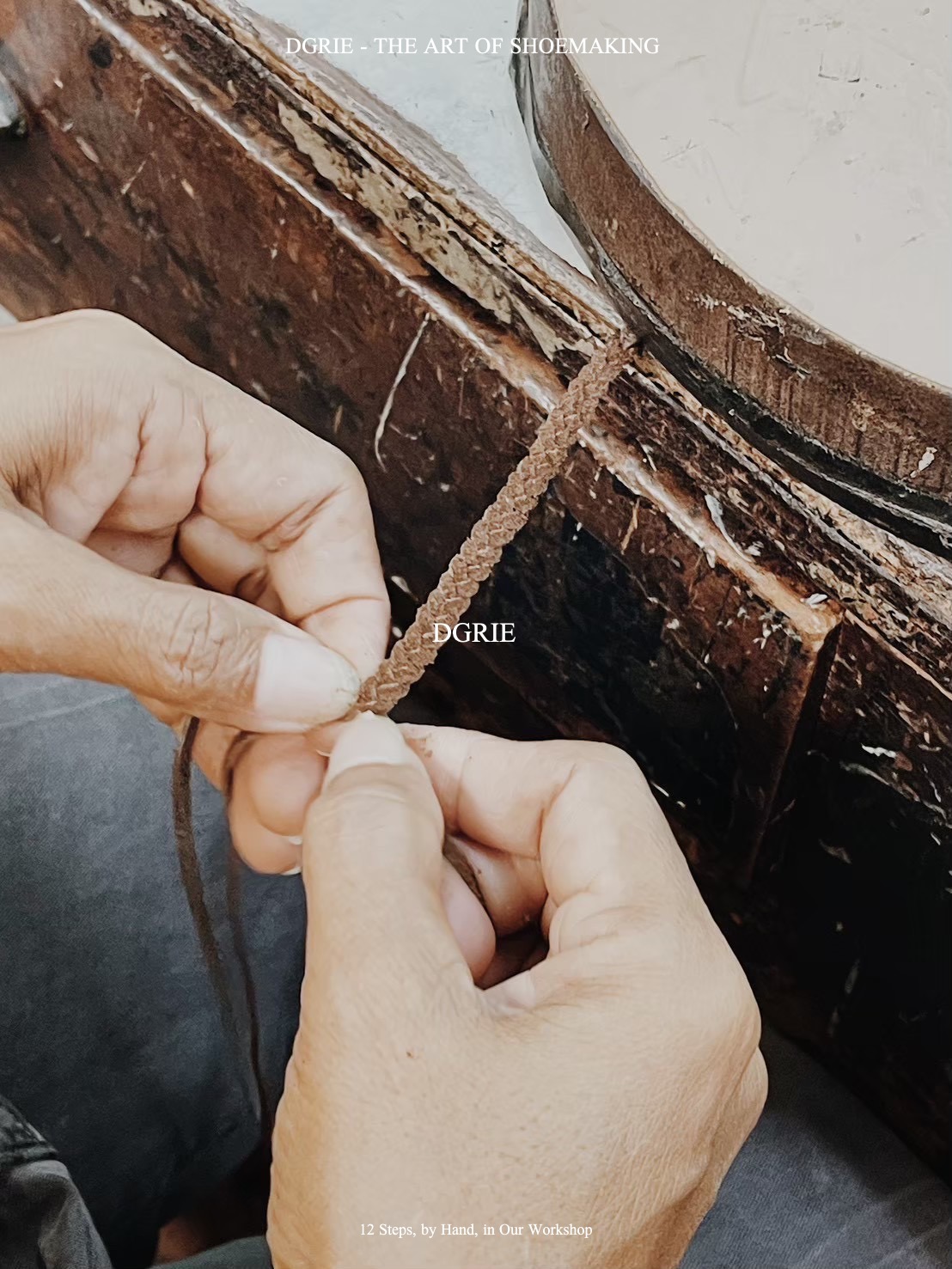
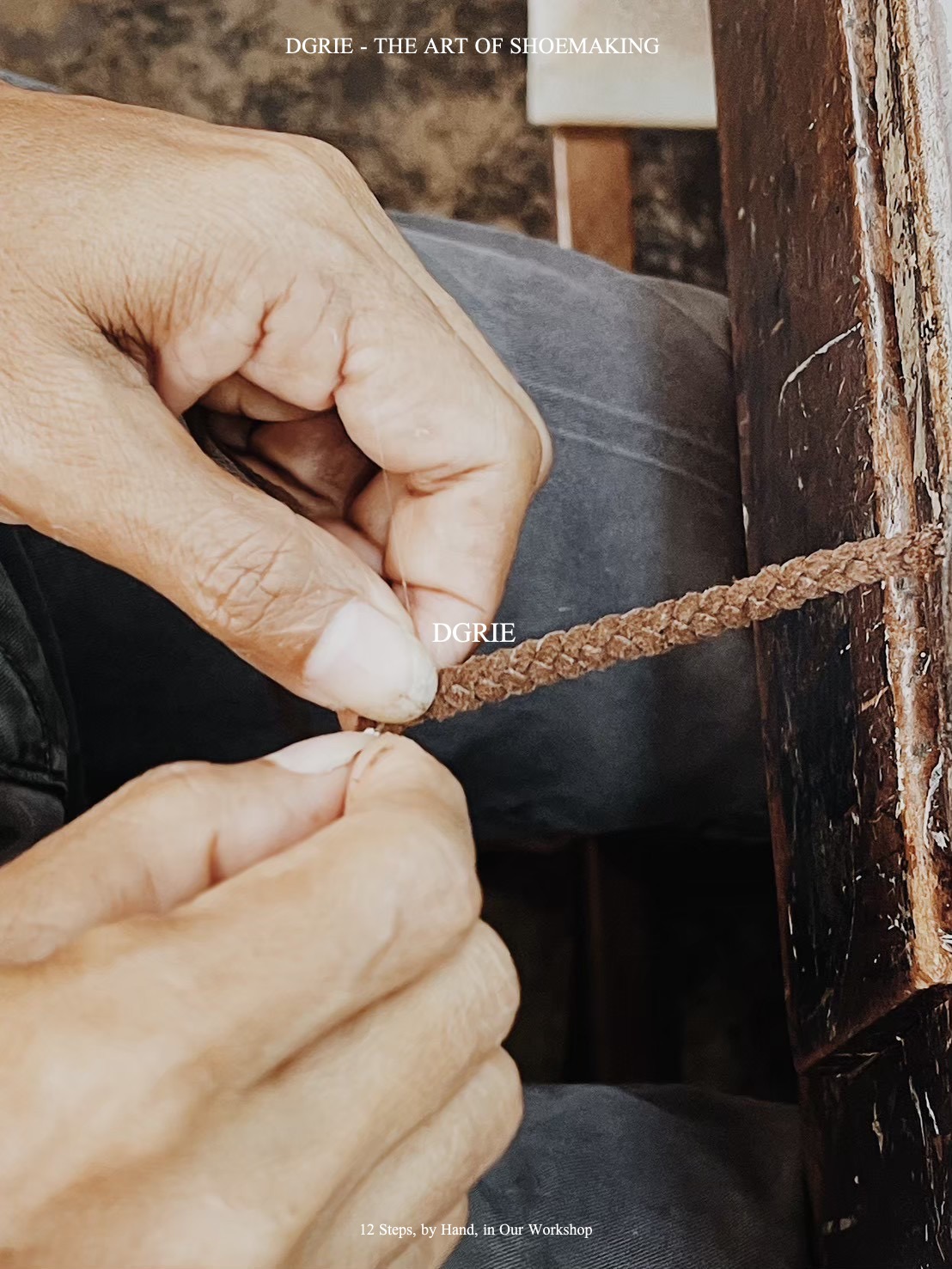
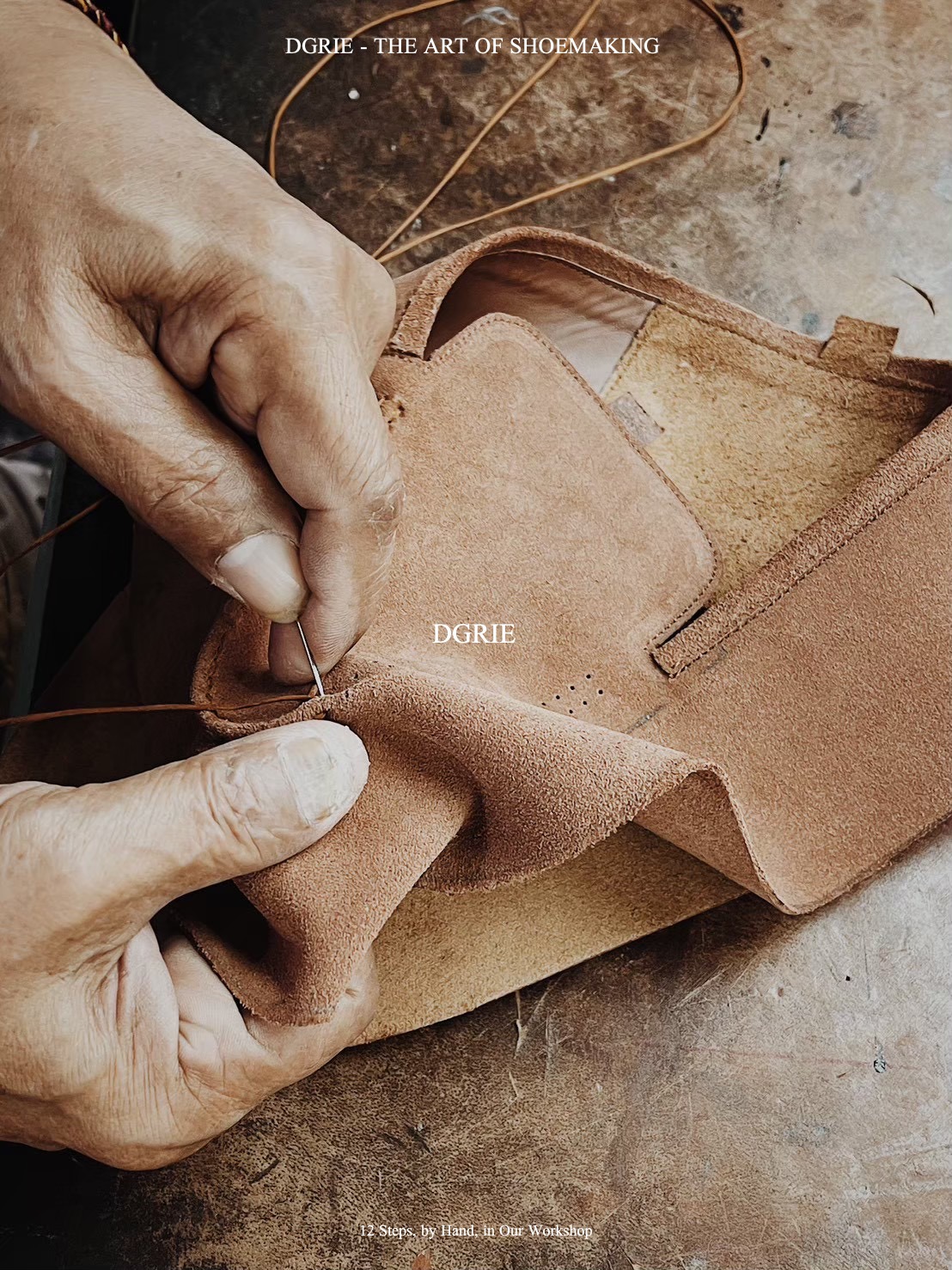
For every stitch made by hand, our craftsmen prepare their own thread. Lengths of strong linen are drawn through a block of beeswax, hand by hand, until the fibers are fully saturated. The wax does three things at once: it strengthens the thread against years of wear, it seals the stitch holes against moisture, and it gives each thread the slight tackiness needed to hold a knot tight. It is a small ritual repeated thousands of times across the life of our workshop — and it is one of the reasons our hand-stitched seams will outlast the shoes themselves.
Hand
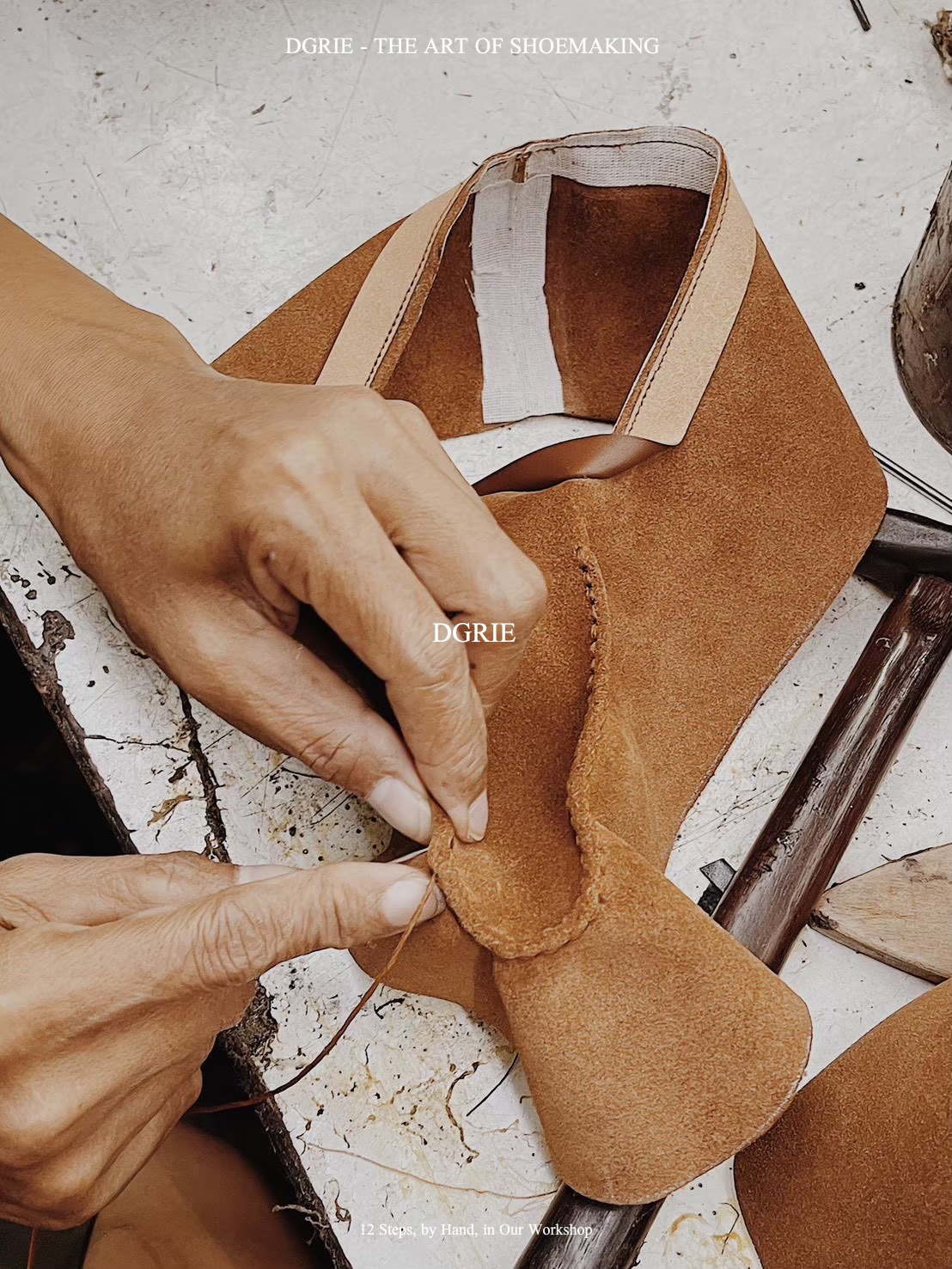
Step 04 — Hand Stitching
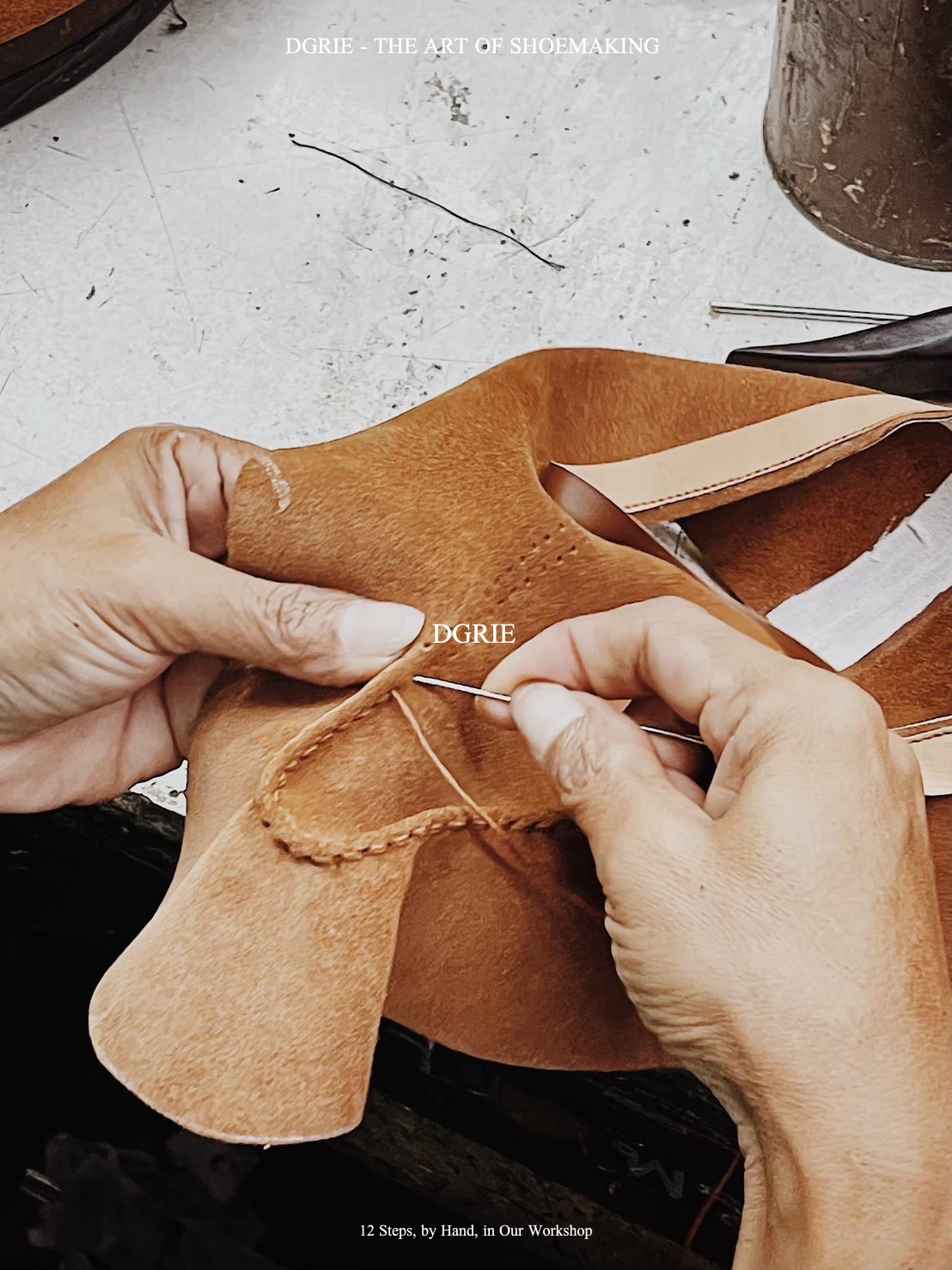
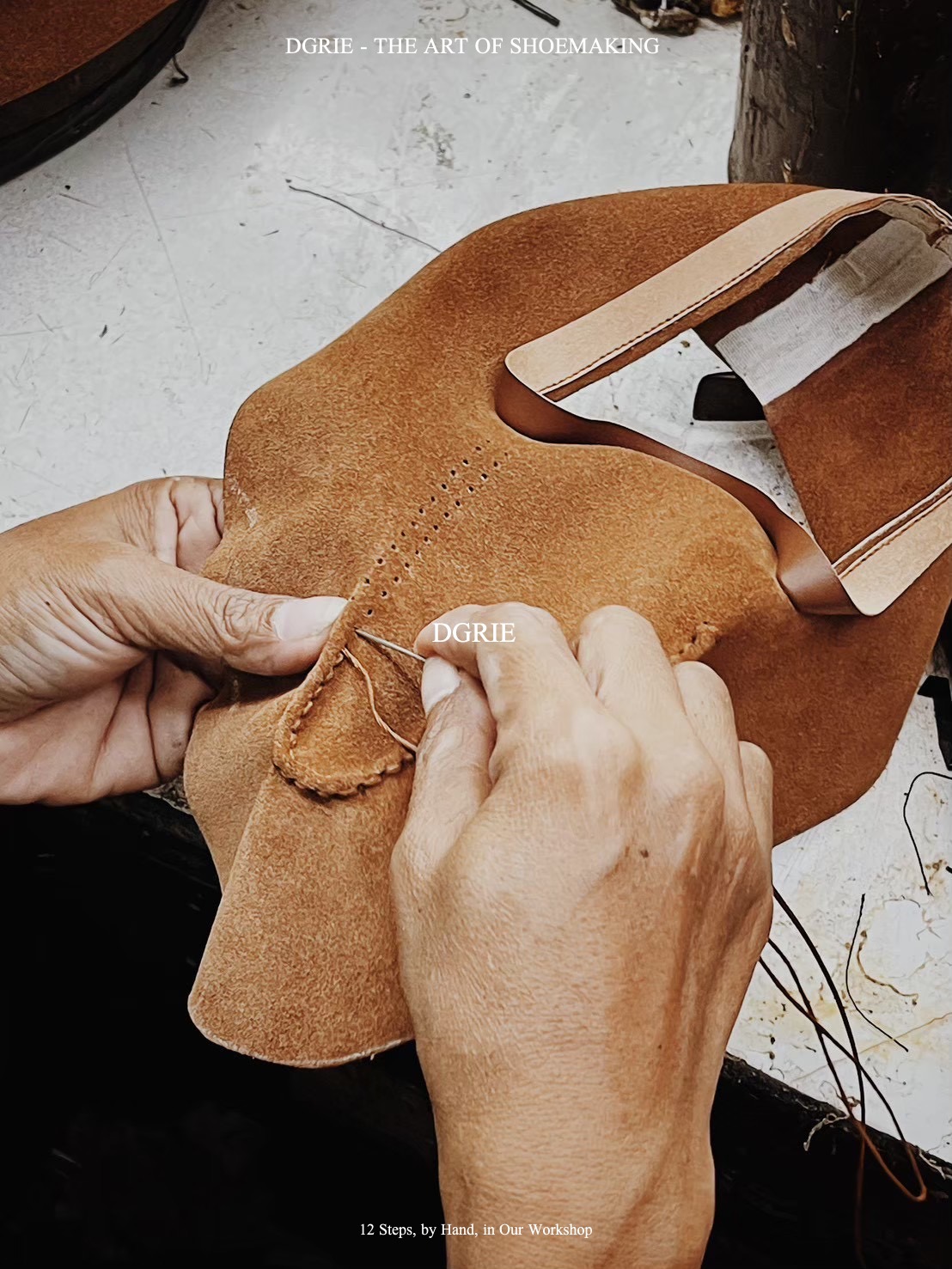
Where machine stitching ends, the hand of the craftsman begins. Decorative seams, reinforcement points, and the most visible stitches on the upper are sewn by hand, one stitch at a time, using a saddle-stitch technique that locks each pass independently. If a single stitch ever fails, the seam beside it holds firm — unlike machine stitching, which can unravel in a single line. It is slower, quieter work, and it leaves a finish that no machine can replicate.
Step 05 — Machine Stitching the Upper
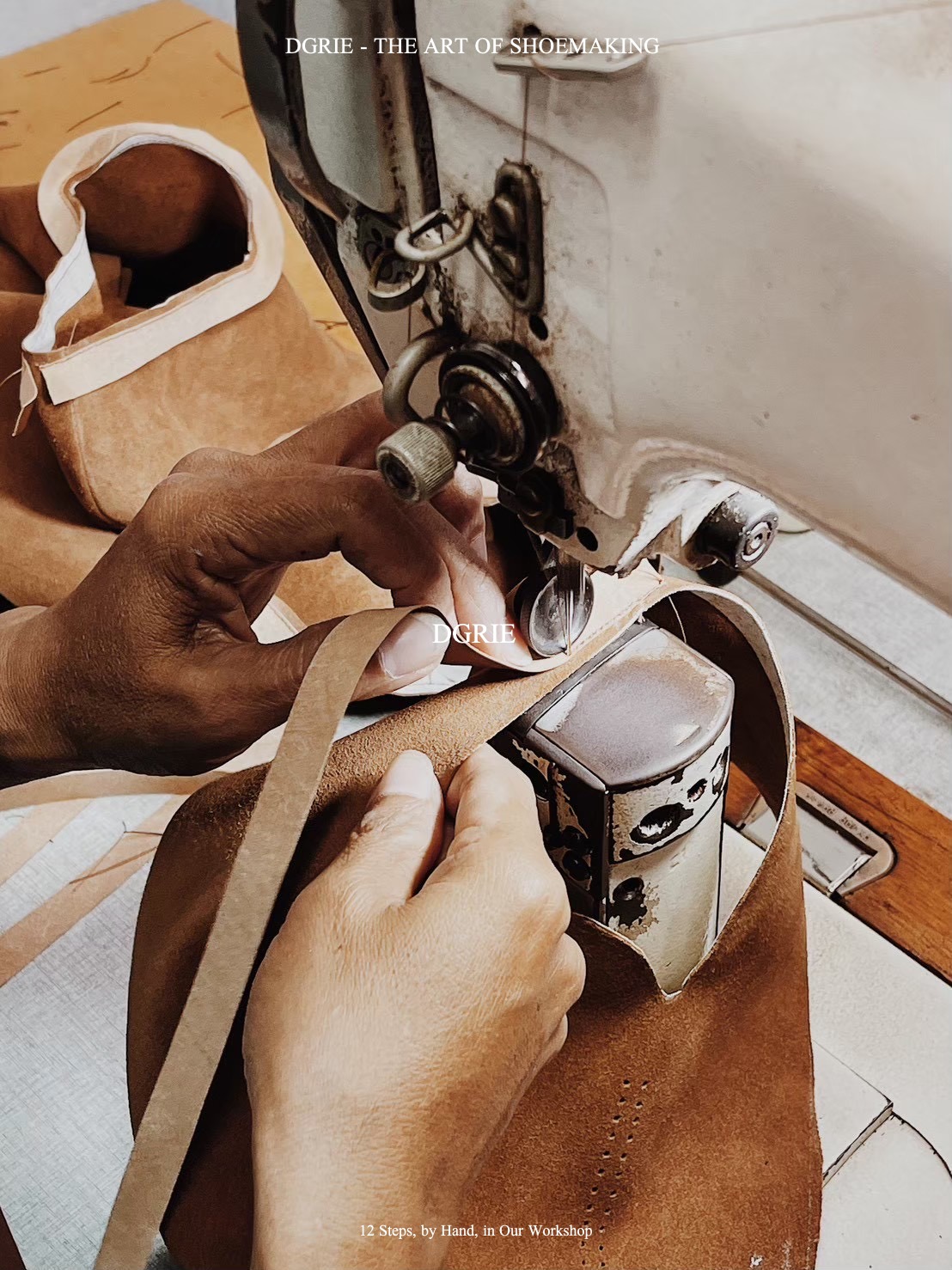
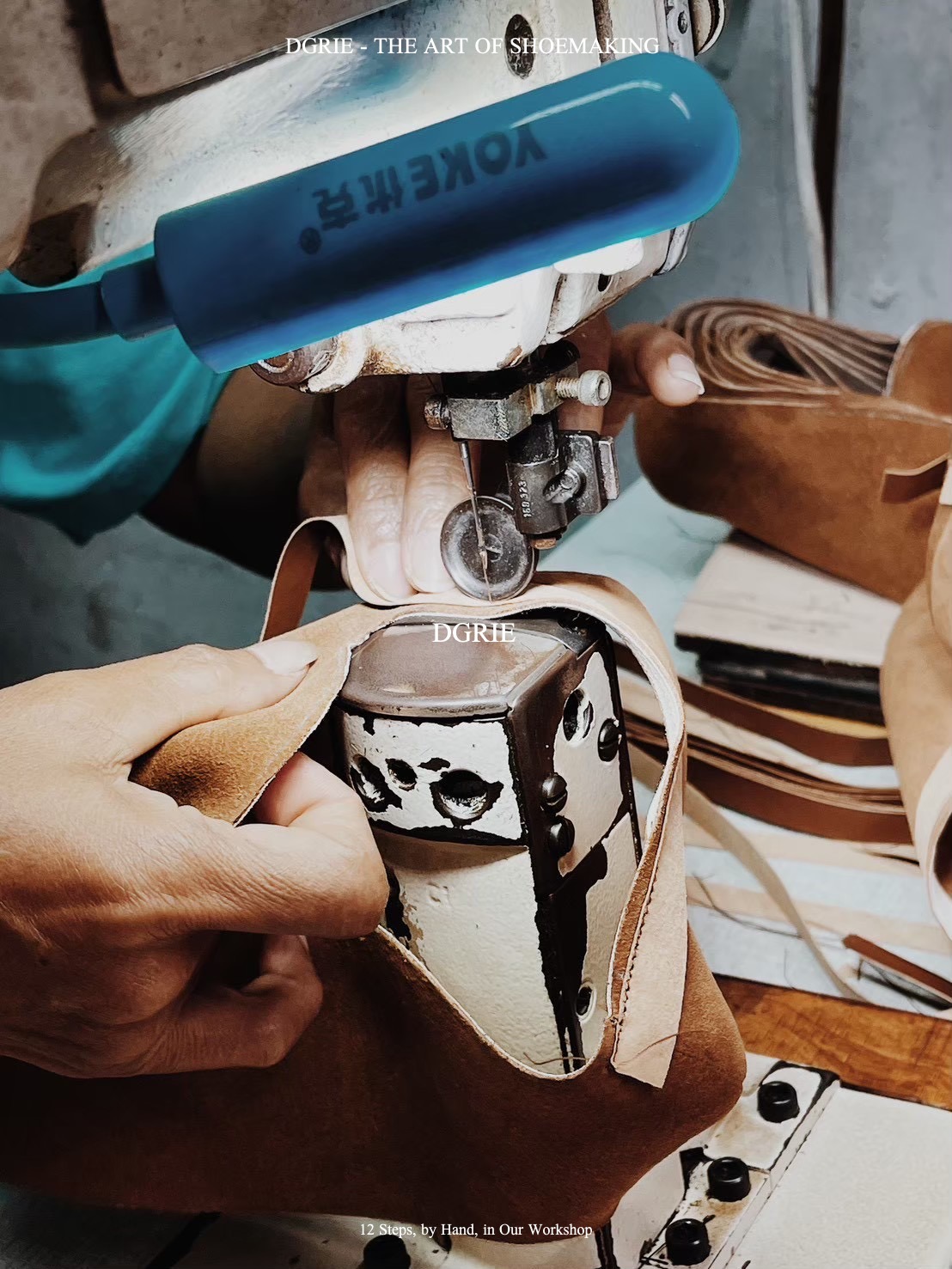
The main panels of the upper — vamp to quarter, quarter to heel, lining to leather — are joined on a Pfaff industrial sewing machine, an old workhorse known to shoemakers worldwide for its precision and its strength. Each seam is guided by hand, the leather fed through the foot of the machine at a steady, even pace so that every stitch lines up to within a millimeter of the last. Machine stitching gives our shoes their structural integrity; the consistency of these long, straight seams is what allows the upper to hold its shape through years of wear.
Step 06 — Reinforcement & Lining
Once the outer panels are joined, the lining and reinforcement pieces are sewn in. The heel counter — a stiffened layer that gives the back of the shoe its supportive shape — is bound into place along with the binding tape that runs along the topline. These are the parts of the shoe you never see, but feel every time you slip a foot inside. They are what make a DGRIE shoe feel structured rather than slack, supportive rather than soft. Each reinforcement is positioned, pinned, and stitched by hand-guided machine.
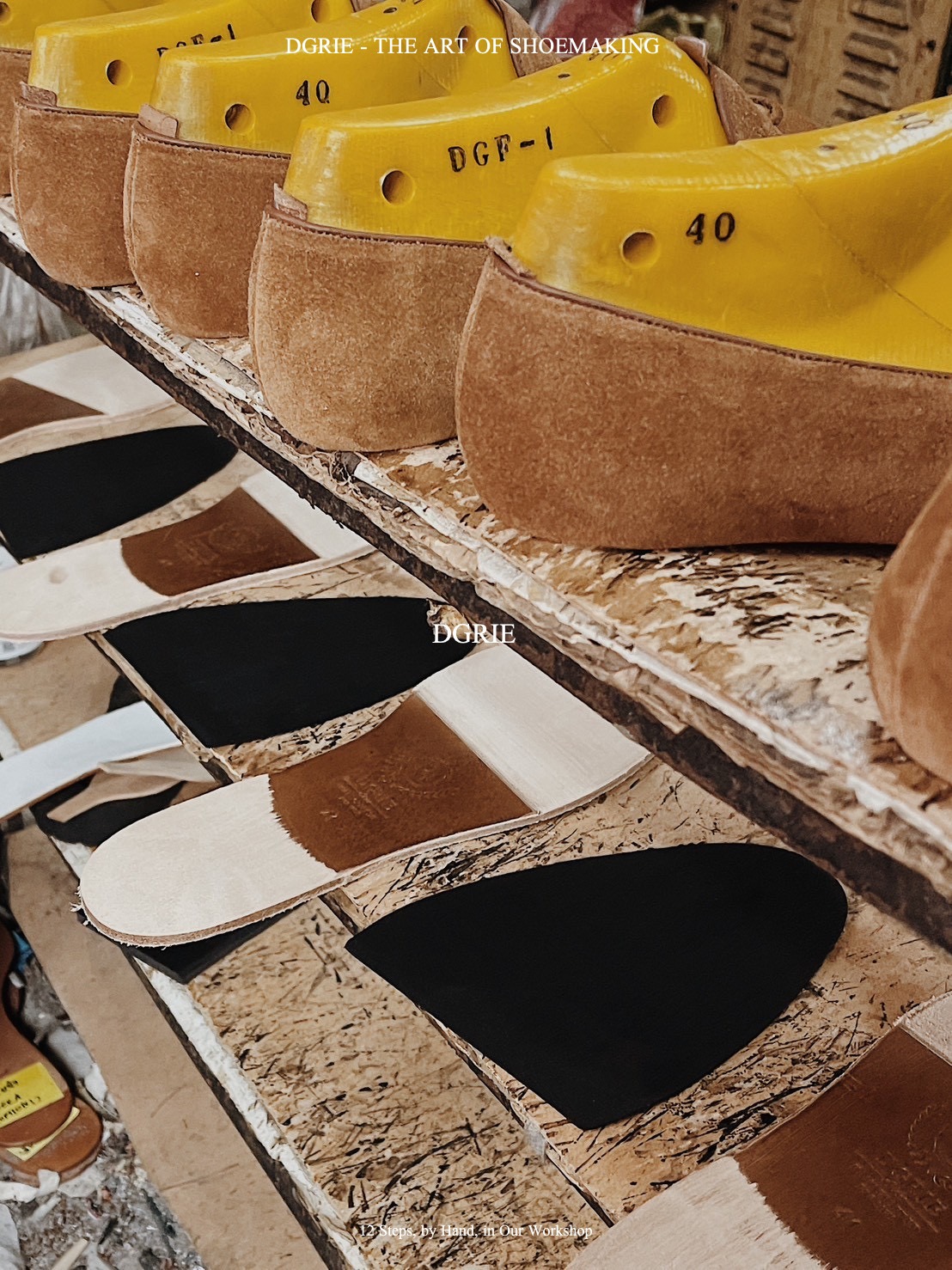
Step 07 — Lasting
This is the moment a flat upper becomes a three-dimensional shoe. The completed upper is pulled, stretched, and tacked over a wooden last — a foot-shaped form that defines the silhouette, the toe shape, and the fit of the finished shoe. Lasting is a craft of feel: too tight and the leather creases unevenly; too loose and the shoe loses its line. Our craftsmen work the leather slowly, easing it
Insole
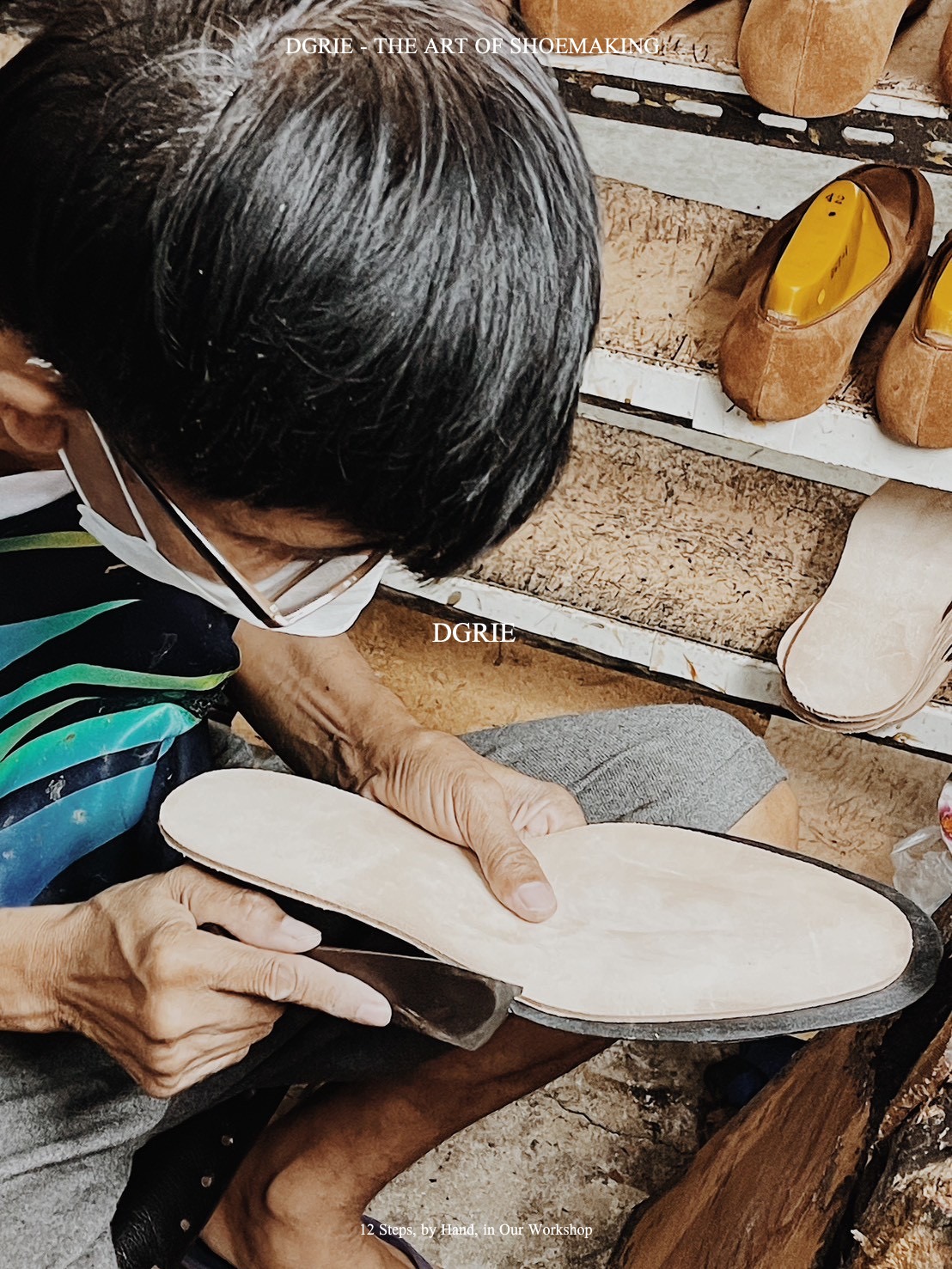
Step 08 — Preparing the Insole
While the upper is being lasted, the insole — the foundation of the shoe — is being shaped to match. A piece of firm leather is cut, beveled, and contoured to the exact profile of the last, with a slight cushioned section where the ball of the foot will rest. The insole is what your foot actually touches every day; it is what shapes itself to you over time, becoming more comfortable with every wear. We use full leather insoles rather than synthetic boards because leather breathes, leather
Step 09 — Sole Assembly
With the upper lasted and the insole ready, the two come together. The insole is fixed onto the bottom of the lasted upper, and the outsole — a layer of full leather — is bonded on top using heat, pressure, and time. Each layer is aligned by hand, pressed firmly into place, and given the time it needs to set before the shoe moves on. This is the step that decides whether a shoe will hold together for two years or twenty.
Sanding & Polishing
Step 10 — Sanding & Polishing the Sole
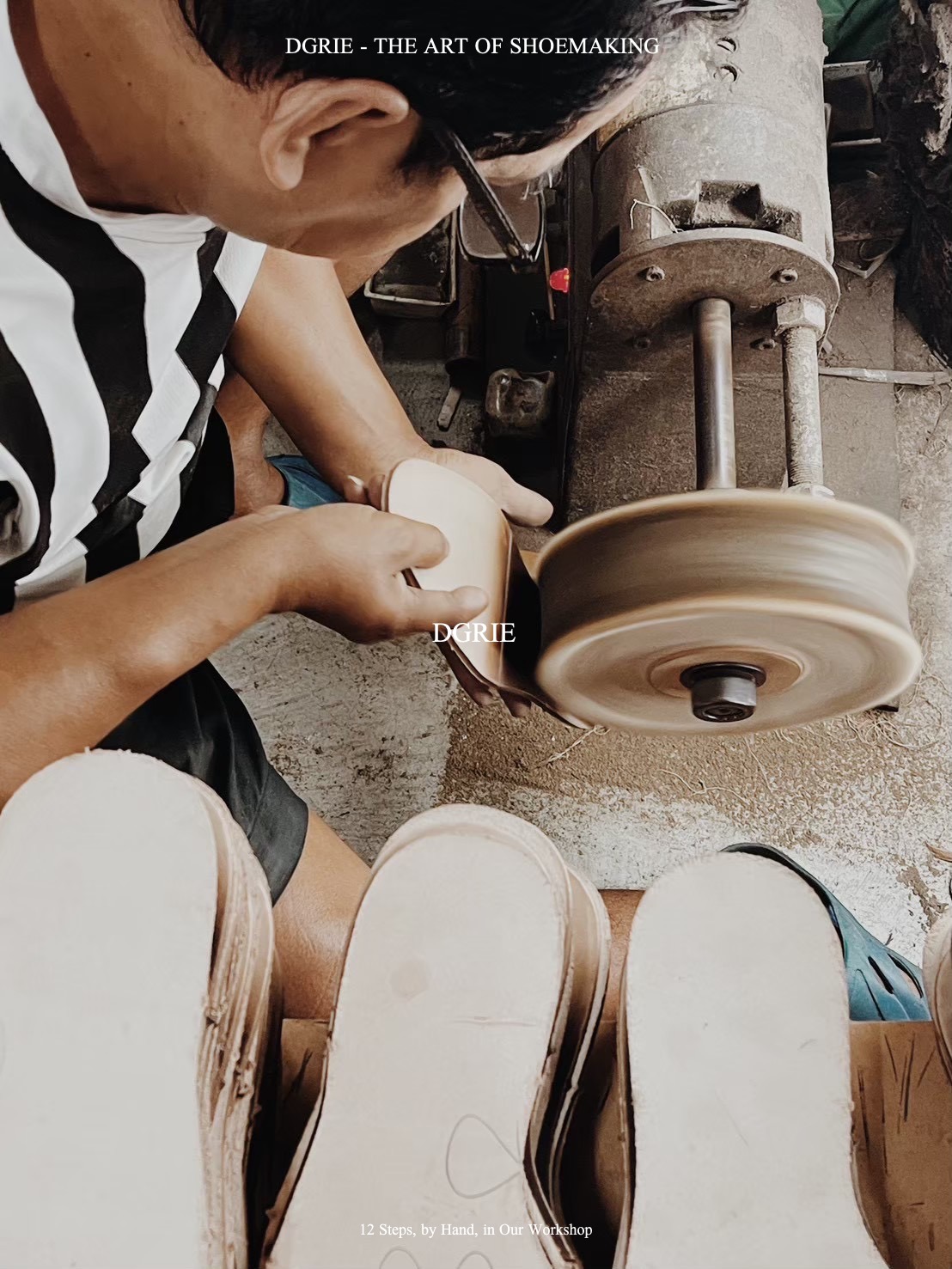
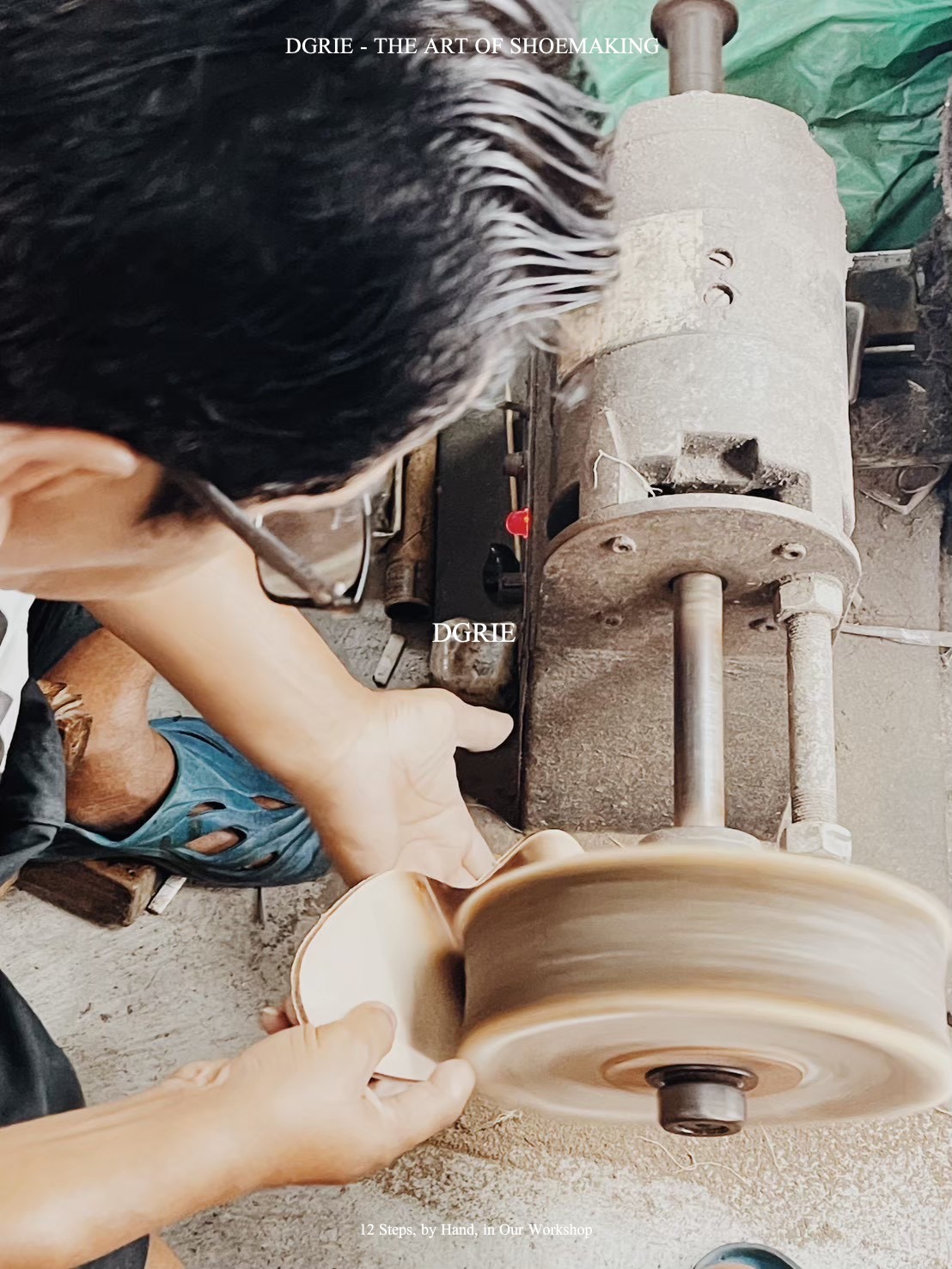
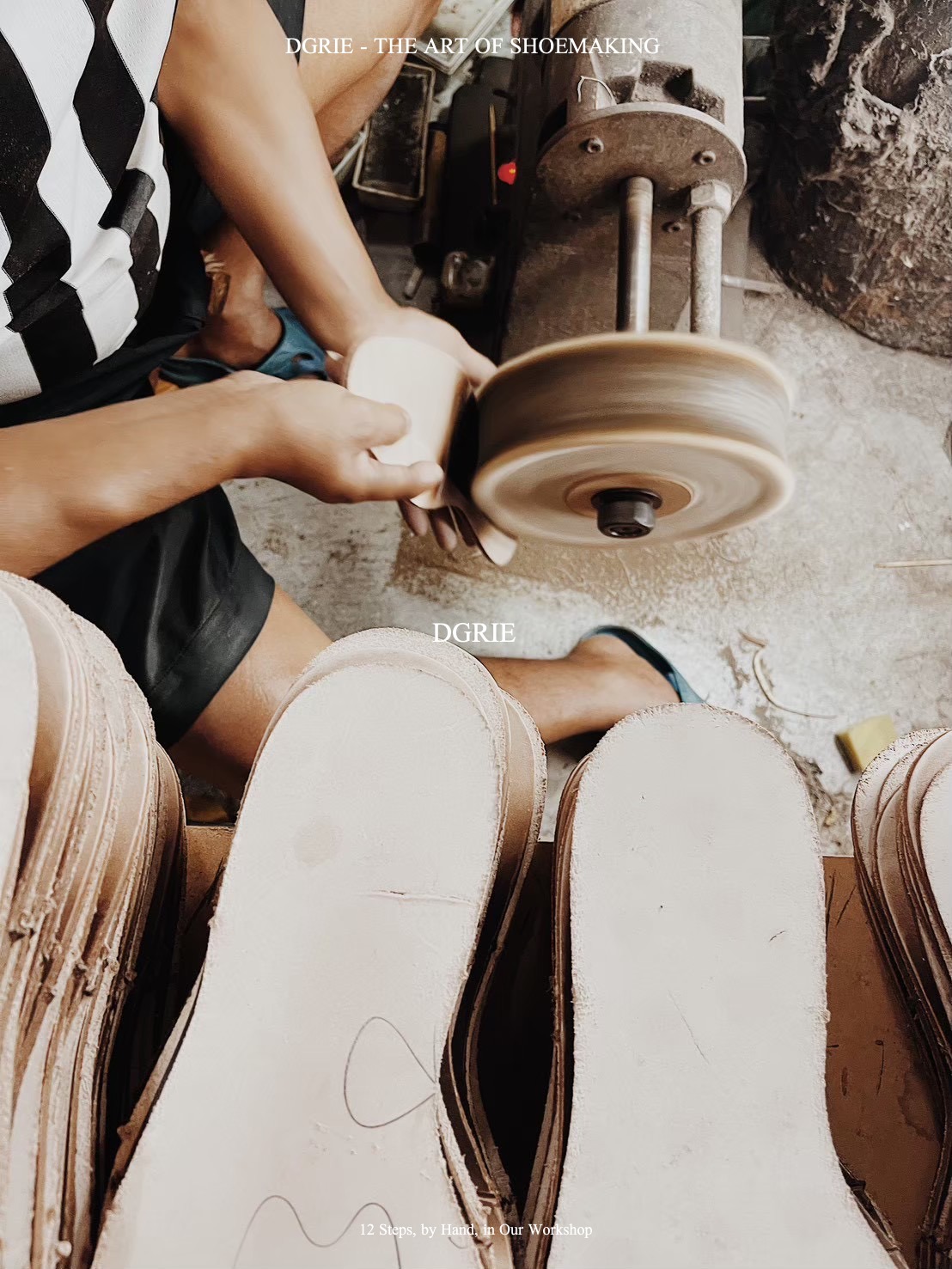
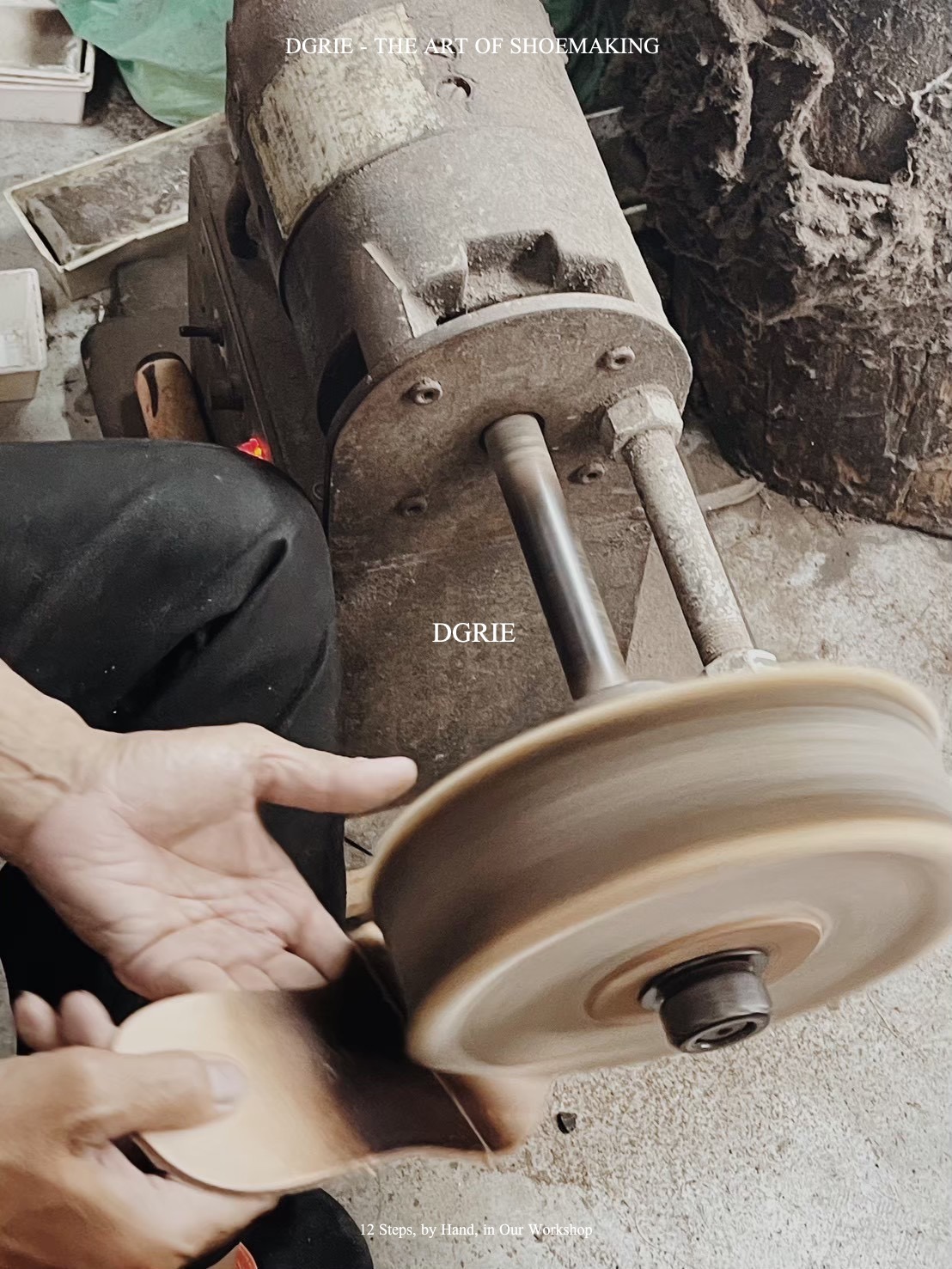
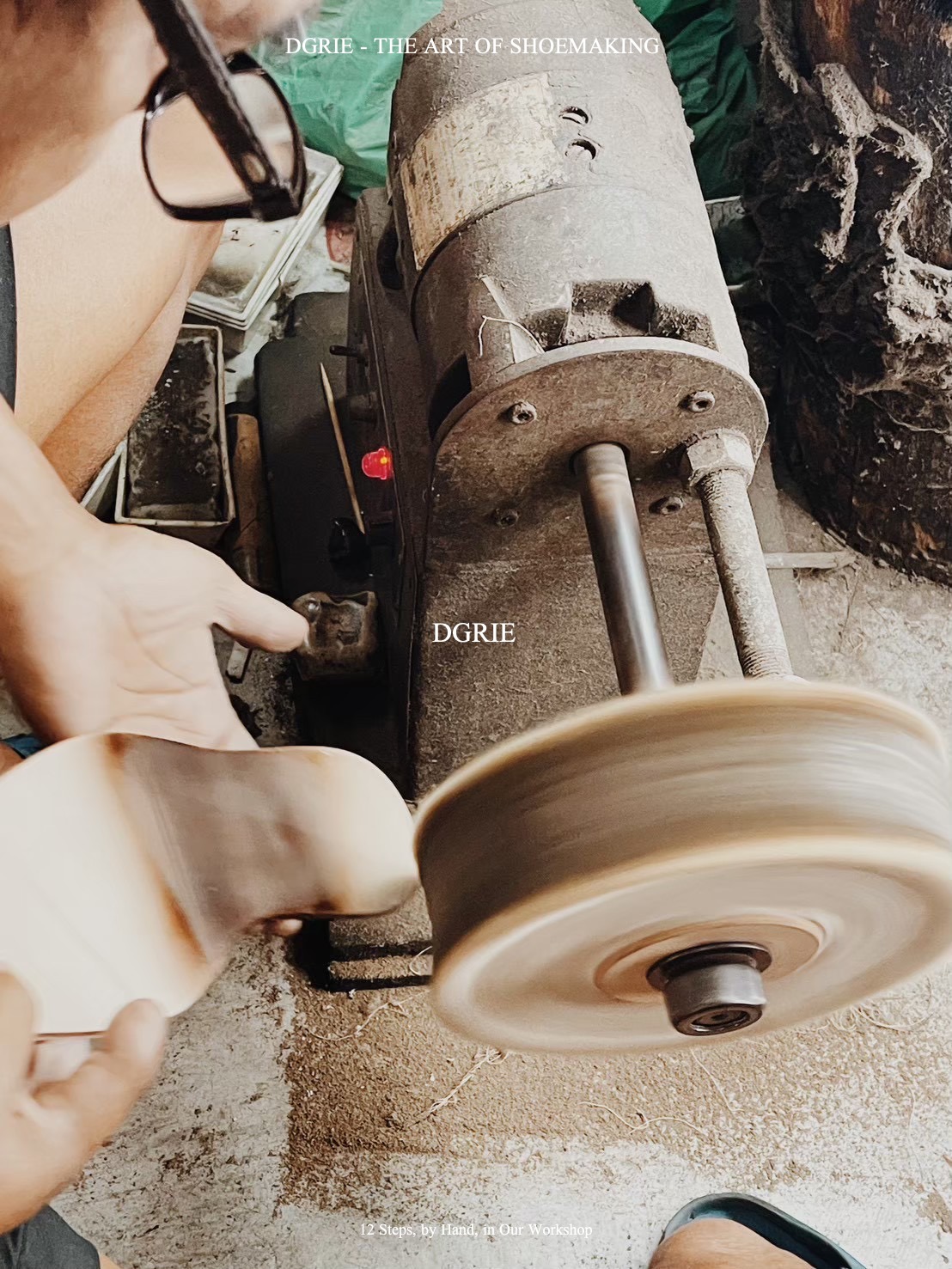
Once the sole is bonded, its edges are still rough — wider than the upper, layered with adhesive, uneven. The shoe is taken to the sanding wheel, where a craftsman holds the sole against a spinning abrasive disc and works the edge slowly around the entire perimeter. Then comes the polishing wheel: a softer surface that smooths the sanded edge and brings up a clean, even finish. This is the step that gives a DGRIE sole its sharp, defined profile — that crisp line where the upper meets the welt, the line a tailor would call clean.
Finished
Step 11 — Finishing & Resting
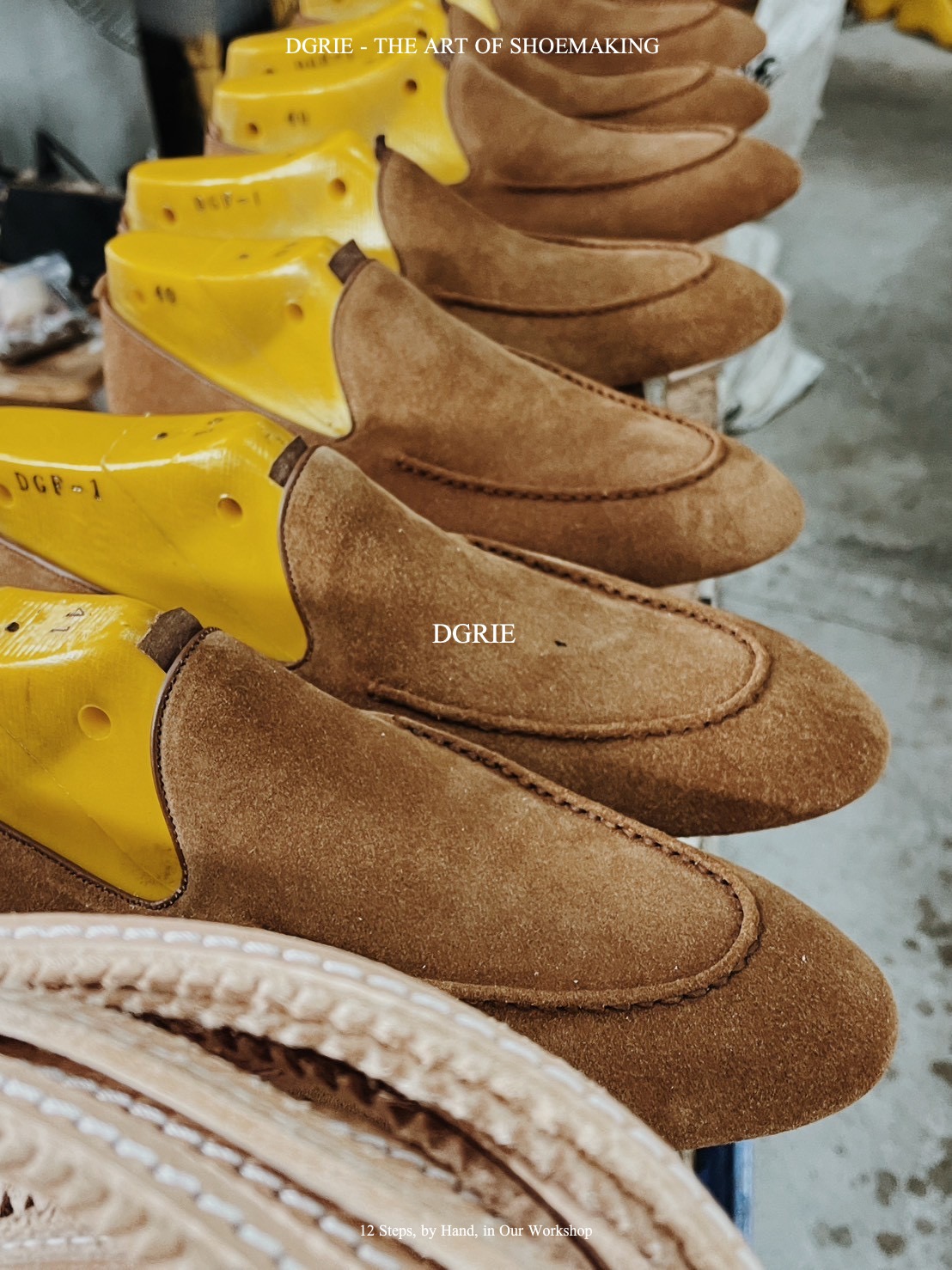
Before a shoe leaves the workshop, it must rest. The completed pairs are left on their lasts for several days, allowing the leather to fully settle into its permanent shape, the seams to relax into place, and any tension in the upper to ease out. During this time the shoes are also conditioned and polished — suede is brushed and steamed to lift its nap; smooth leather is fed with cream and
Step 12 — DGRIE Branding
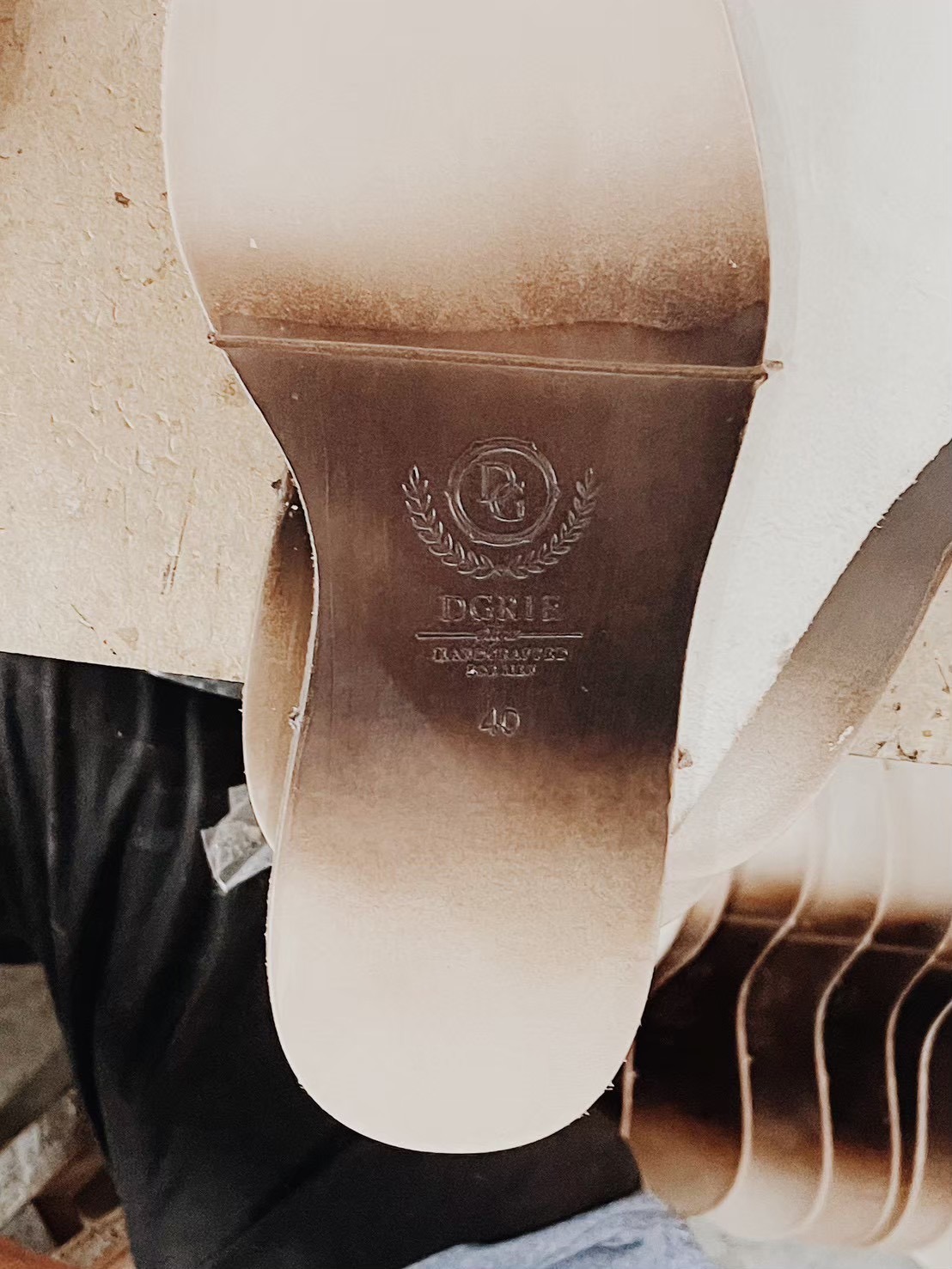
The final act is the smallest one. The DGRIE crest — a quiet laurel-wreath monogram and the word “Handcrafted” — is stamped into the leather of each sole. It is not a flashy logo, and it is never on the outside of the shoe. We put it where only the wearer will see it, on the underside where shoe meets ground, because that is where it belongs: a quiet signature, a maker’s mark, a promise that this shoe was made for you, by hand, by someone who cared about every one of the eleven steps that came before.
Why It Matters
Twelve steps. Forty-one photographs. A workshop full of tools that have not changed in fifty years. We could make shoes faster — most factories do — but we choose not to, because the shoe that comes out at the end of this process is not a product. It is something you put on every morning, walk through your life in, and have re-soled five years from now because you cannot imagine replacing it.
That is what handcrafted means at DGRIE.
Crafted, not manufactured.


What's Your Reaction?